The air inside your home can have a bigger impact on your everyday environment than you might realize. Cooking, cleaning, dust, humidity, and poor ventilation can all affect indoor air quality.
The good news is that improving the air in your home does not have to involve complicated routines or expensive changes.
Simple daily habits can make a meaningful difference.
Here are seven easy habits that can help you maintain fresher, cleaner indoor air.

1. Open Your Windows Regularly
One of the simplest ways to refresh indoor air is to bring in outdoor air.
Opening your windows for a few minutes can help replace stagnant indoor air and reduce the concentration of certain indoor pollutants.
This can be especially useful after activities that produce moisture or particles, such as:
- Cooking
- Showering
- Cleaning
- Using household sprays
- Burning candles or incense
How often you should ventilate depends on your climate, outdoor air quality, season, and home.
If outdoor air quality is poor, keeping windows closed may be a better choice. Checking your local air-quality conditions can help you decide when ventilation makes sense.
2. Use Your Kitchen Exhaust Fan While Cooking
Cooking can release particles, moisture, and other substances into the air, especially when frying, grilling, or cooking at high temperatures.
Your kitchen exhaust fan can help remove some of these pollutants before they spread throughout your home.
Try to turn your exhaust fan on while cooking and leave it running for a little while afterward.
If your fan vents outdoors, it can be particularly useful because it removes air from inside the home rather than simply circulating it.
Don’t have an exhaust fan that vents outdoors? Opening a nearby window when appropriate can also help improve ventilation.
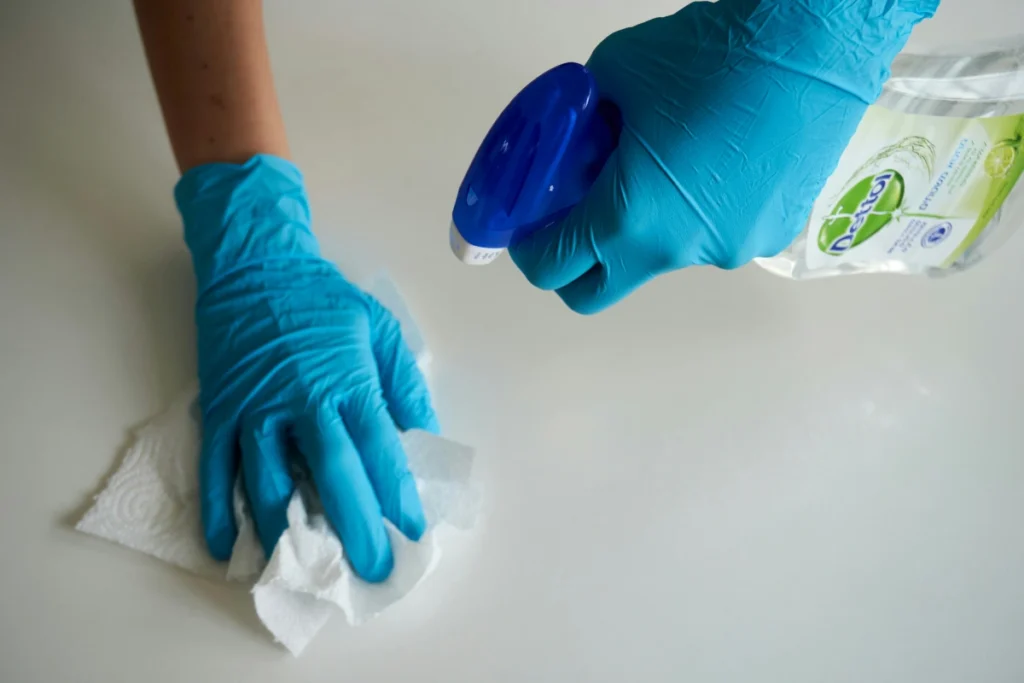
3. Keep Dust Under Control
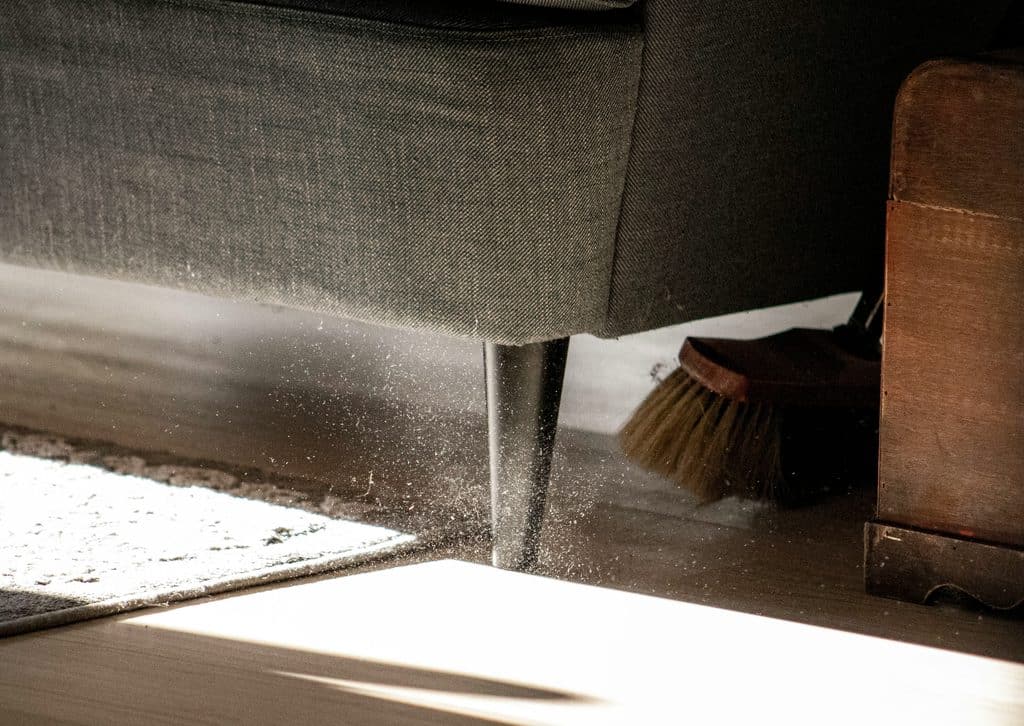
Dust is a normal part of every home, but allowing it to accumulate can contribute to poorer indoor air quality.
Dust can contain a mixture of particles from inside and outside your home, including soil, fibers, pollen, and other debris.
You don’t need to clean your entire home every day.
Instead, focus on areas where dust tends to accumulate:
- Floors
- Shelves
- Under furniture
- Window sills
- Bedroom surfaces
- Areas around electronics
Regular cleaning can help prevent dust from building up and being disturbed back into the air.
4. Keep Humidity at a Comfortable Level
Humidity is another important part of indoor air quality.
Excess moisture can create conditions that encourage mold growth, while very dry air can make your home feel uncomfortable.
For many homes, maintaining indoor relative humidity around 30% to 50% is a commonly recommended range.
You can use a simple humidity monitor to understand what is happening inside your home.
Pay particular attention to rooms where moisture is common, such as:
- Bathrooms
- Kitchens
- Laundry rooms
- Basements
After taking a shower, for example, using the bathroom exhaust fan and allowing moisture to escape can help prevent excessive humidity.
5. Avoid Smoking Indoors
If you smoke, avoiding smoking inside your home is one of the most important steps you can take to improve indoor air quality.
Tobacco smoke releases numerous chemicals and particles into indoor air. These can remain in the environment even after the visible smoke disappears.
Opening a window or using an air-cleaning device does not completely eliminate the risks associated with smoking indoors.
The simplest approach is to keep smoking outside and away from doors, windows, and ventilation openings whenever possible.
The same principle can apply to other activities that produce significant amounts of smoke.
6. Be Mindful of Candles, Incense, and Fragranced Products
Candles, incense, and some fragranced products can release particles and other substances into indoor air when they are used.
That does not necessarily mean you need to eliminate everything scented from your home.
Instead, consider how frequently you use these products and whether you actually need them.
For example, you might:
- Burn candles less frequently
- Avoid burning multiple candles at the same time
- Ventilate the room when appropriate
- Avoid using fragranced products simply to mask unwanted odors
If your home has a persistent smell, it can be more useful to find and address the source rather than continuously adding another fragrance.
7. Keep Your Home Well Ventilated
Good ventilation is one of the foundations of healthy indoor air.
Your home naturally accumulates moisture, odors, particles, and other pollutants throughout the day. Without enough air exchange, these substances can remain indoors.
Make ventilation part of your everyday routine.
For example:
Morning: Open windows when outdoor conditions are suitable.
While cooking: Use your kitchen exhaust fan.
After showering: Run the bathroom exhaust fan.
After cleaning: Allow the room to ventilate when appropriate.
Throughout the day: Make sure ventilation systems are operating correctly.
You don’t need to constantly keep your windows open. The goal is simply to give indoor air opportunities to be replaced with cleaner outdoor air when conditions allow.
A Simple Daily Routine for Better Indoor Air
You don’t need a complicated cleaning schedule to start paying more attention to your home’s air.
A simple routine could look like this:
Morning
Open your windows for a few minutes if outdoor air quality and weather conditions are suitable.
During cooking
Use your kitchen exhaust fan, particularly when frying, grilling, or cooking at high temperatures.
After showering
Use the bathroom exhaust fan to help remove excess moisture.
During cleaning
Avoid unnecessarily mixing or overusing cleaning products, and ventilate the room when appropriate.
Evening
Check whether your home feels overly humid, stuffy, or noticeably dusty.
Small habits repeated consistently can be easier to maintain than trying to completely change your home environment overnight.
What About Air Purifiers?
Air purifiers can be useful in some situations, but they are not a replacement for basic ventilation and source control.
If there is a source of pollution inside your home, addressing that source should generally come first.
For example:
If cooking creates a lot of particles → improve kitchen ventilation.
If there is excessive humidity → identify the source of moisture.
If dust accumulates quickly → improve your cleaning routine.
If someone smokes indoors → stopping indoor smoking is much more effective than relying on an air purifier alone.
Think of air cleaning as one possible part of an indoor-air strategy rather than the entire solution.
Small Changes Can Make a Difference
Improving indoor air quality does not have to mean completely changing the way you live.
Start with the habits that are easiest for you:
- Ventilate your home when outdoor conditions are suitable.
- Use exhaust fans while cooking and showering.
- Keep dust from accumulating.
- Monitor indoor humidity.
- Avoid smoking indoors.
- Be mindful of smoke and fragranced products.
- Maintain good overall ventilation.
The goal is not to create a perfectly controlled environment.
Instead, it is about creating a home where fresh air, reasonable humidity, cleanliness, and good ventilation are part of your everyday routine.
Small, consistent habits can be a much more sustainable approach than trying to change everything at once.