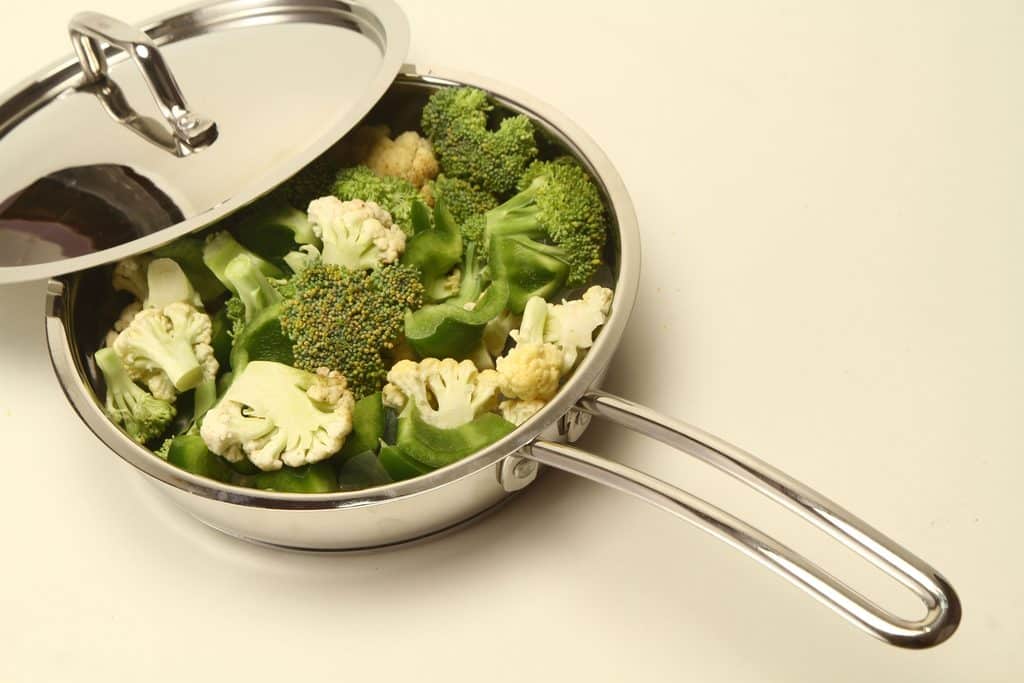
If you’re trying to create a lower-tox kitchen, your cookware is a good place to start. Stainless steel pans are a popular alternative to traditional nonstick cookware because they don’t rely on a synthetic nonstick coating.
But not all stainless steel pans are made the same. The number of layers, the quality of the stainless steel, the construction, weight, and cooking performance can all make a difference.
In this guide, we’ll look at some of the best stainless steel pans for non-toxic cooking in 2026 and explain what to look for before buying one.
Why Choose Stainless Steel Cookware?
Stainless steel is one of the most durable materials commonly used for cookware.
Unlike traditional nonstick pans, a stainless steel cooking surface does not depend on a nonstick coating that can wear down over time.
A good stainless steel pan can also last for many years when properly maintained, making it an option worth considering if you’re building a more durable kitchen.
The main benefits of stainless steel include:
- No synthetic nonstick coating
- Excellent durability
- High heat resistance
- Good resistance to scratches
- Suitable for many cooking methods
- Easy to recycle at the end of its life
- Compatible with most stovetops, depending on the model
However, stainless steel does have a learning curve. Food can stick if the pan is not properly preheated or if the cooking temperature is too high.
That’s why choosing a well-constructed pan is important.
What to Look for in a Stainless Steel Pan
Before buying a stainless steel pan, there are several things worth checking.
1. The Stainless Steel Grade
Many quality cookware products use 18/10 stainless steel.
The numbers refer to the approximate percentages of chromium and nickel in the steel. Chromium helps with corrosion resistance, while nickel contributes to durability and the appearance of the metal.
You may also see 18/8 stainless steel used in cookware.
The grade alone isn’t the only factor to consider, though. The overall construction of the pan is equally important.
2. 3-Ply vs. 5-Ply Construction
You’ll often see stainless steel cookware described as 3-ply or 5-ply.
This refers to the number of layers used in the cookware.
A typical 3-ply pan may have:
- Stainless steel cooking surface
- Aluminum core for heat distribution
- Stainless steel exterior
Five-ply cookware uses additional layers, which can improve heat distribution and responsiveness, although it can also make the pan heavier and more expensive.
For most home cooks, a well-made 3-ply pan can provide a good balance between performance, weight, and price.
3. Fully Clad Construction
Another important term is fully clad.
A fully clad pan has its layers extending throughout the base and sides of the cookware.
This can provide more consistent heating than cookware where the heat-conducting material is only located in the bottom.
If you want a versatile pan for everyday cooking, fully clad construction is worth considering.
4. Induction Compatibility
If you have an induction cooktop, make sure the pan is specifically listed as induction compatible.
Many stainless steel pans are compatible with induction, but not every stainless steel product is.
It’s also worth checking compatibility if you plan to change your cooktop in the future.
5. Weight and Handle Design
A heavier pan isn’t automatically better.
Thick, multi-layer cookware can provide excellent heat distribution, but excessive weight can make everyday cooking less convenient.
Look for a handle that feels comfortable and stays relatively cool during normal cooking.
A helper handle can also be useful for larger pans.
Best Stainless Steel Pans for Non-Toxic Cooking
Here are several stainless steel pans worth considering if you’re looking for durable cookware without a traditional nonstick cooking surface.
1. All-Clad D3 — Best Overall
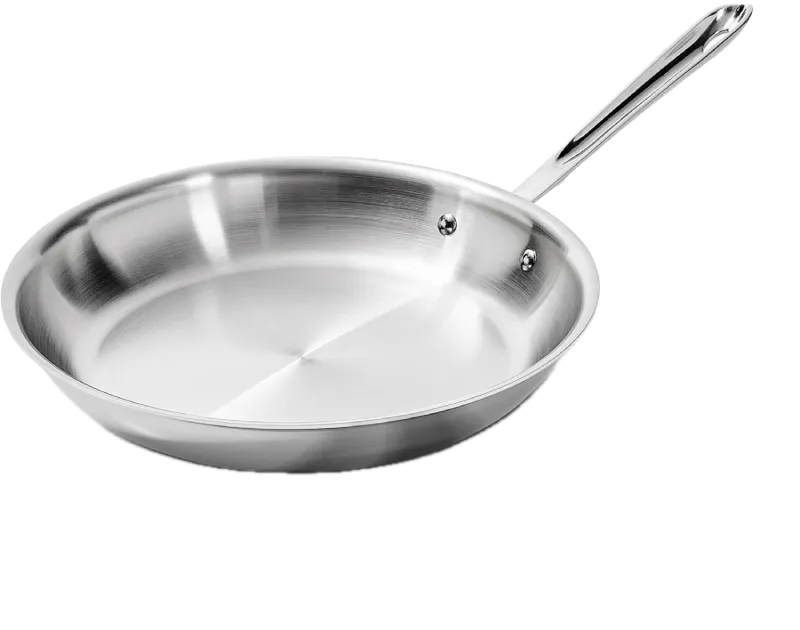
Best for: Everyday cooking
Key features:
- Stainless steel cooking surface
- Multi-layer construction
- Induction compatible
- Oven safe
- Durable construction
Why we like it:
This type of pan is a good all-around option for people who want to transition from nonstick cookware to stainless steel.
Its multi-layer construction is designed to distribute heat more evenly, while the stainless steel cooking surface provides a durable, uncoated cooking area.
2. Cuisinart MultiClad Pro — Best for Beginners
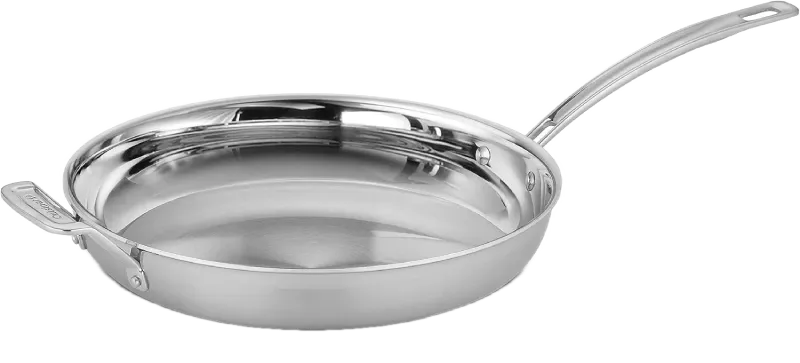
Best for: People new to stainless steel cooking
If you’re using stainless steel for the first time, a pan with good heat distribution and a comfortable handle can make the transition easier.
This model is a practical choice for everyday meals such as vegetables, chicken, pasta sauces, and stir-fries.
Key features:
- Stainless steel cooking surface
- Multi-layer construction
- Induction compatible
- Oven safe
- Easy to clean with proper technique
3. Made In — Best Premium Option
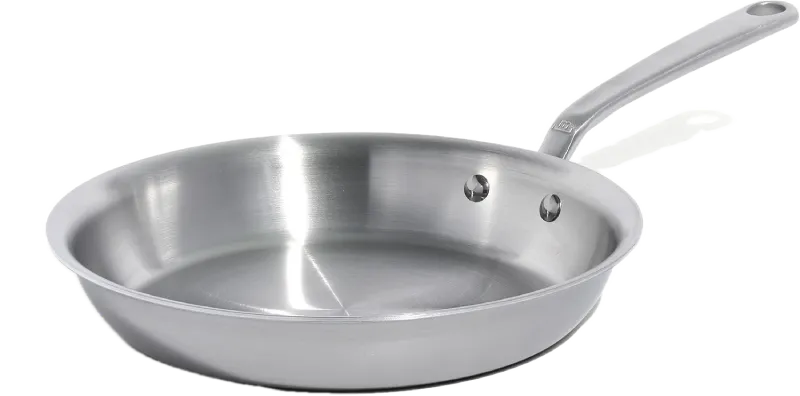
Best for: Long-term cookware investment
Premium stainless steel cookware generally focuses on construction quality, heat distribution, durability, and ergonomics.
A well-made multi-ply pan can be a good option if you’re looking for cookware that you plan to use for many years.
Key features:
- Premium stainless steel
- Multi-ply construction
- Excellent heat distribution
- Induction compatible
- Designed for long-term use
4. Tramontina Signature Tri-Ply Clad Stainless Steel — Best Budget Option
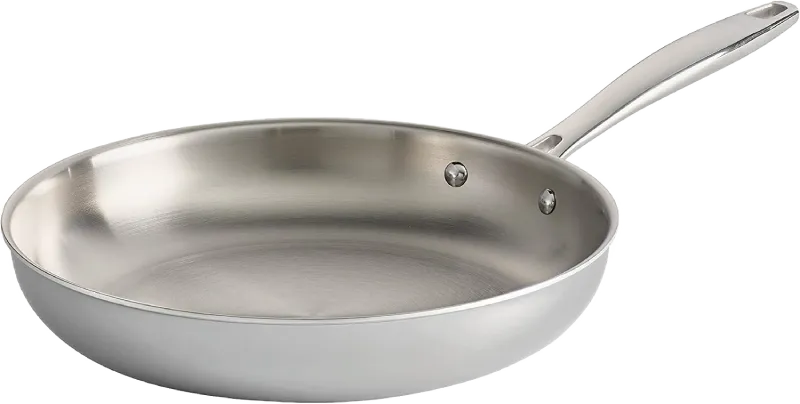
Best for: Affordable everyday cooking
You don’t necessarily need to spend hundreds of dollars to start cooking with stainless steel.
A more affordable pan can be a good introduction to uncoated cookware, particularly if you’re replacing one or two older nonstick pans rather than your entire cookware collection.
Key features:
- Stainless steel cooking surface
- Affordable price
- Induction compatible
- Suitable for everyday cooking
5. T-Fal Pro Tri-Ply Fry Pan — Best for Induction
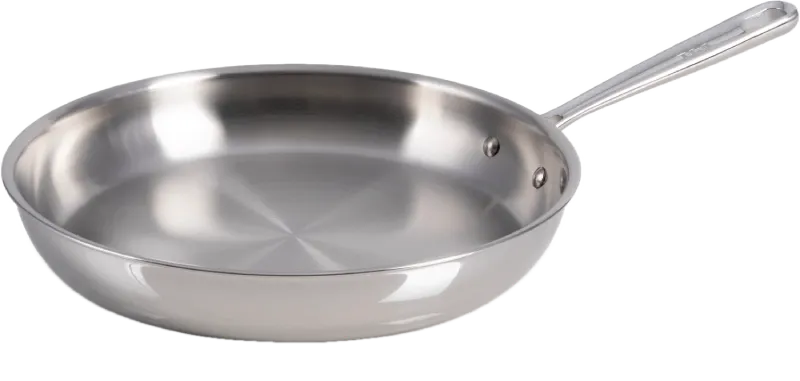
Best for: Induction cooktops
If you use induction, look for a stainless steel pan specifically designed to work with induction heating.
A suitable model should provide good contact with the cooktop and distribute heat evenly across the cooking surface.
Key features:
- Induction compatible
- Stainless steel cooking surface
- Multi-layer construction
- Oven safe
- Durable exterior
How to Cook With Stainless Steel Without Food Sticking
One of the biggest concerns people have when switching to stainless steel is food sticking.
Fortunately, there’s a learning curve that can be mastered fairly quickly.
1. Preheat the Pan
Start by heating the empty pan over medium heat.
Don’t immediately add your ingredients.
2. Add Your Cooking Oil
Once the pan is properly heated, add a small amount of cooking oil.
Allow the oil to heat for a few seconds before adding your food.
3. Don’t Move the Food Too Quickly
When cooking meat or vegetables, give the food some time to develop a sear.
Trying to move food immediately can cause it to stick.
Once the food has developed a crust, it will often release more easily from the cooking surface.
4. Avoid Excessive Heat
Stainless steel can handle relatively high temperatures, but maximum heat isn’t necessary for most everyday cooking.
Medium or medium-high heat is usually enough for many recipes.
How to Clean a Stainless Steel Pan
Stainless steel is relatively easy to maintain.
For everyday cleaning:
- Allow the pan to cool slightly.
- Remove leftover food.
- Wash with warm water and dish soap.
- Use a non-abrasive sponge for normal cleaning.
- Dry the pan thoroughly.
If food is stuck to the bottom, add some water to the pan and gently heat it.
Letting the residue soften can make cleaning much easier.
For more stubborn stains, a stainless steel-safe cleaner can also be useful.
Are Stainless Steel Pans Really Non-Toxic?
The term “non-toxic cookware” can be misleading because no material should automatically be considered completely risk-free in every situation.
Stainless steel is generally valued because the cooking surface is made from metal rather than a synthetic nonstick coating.
However, stainless steel cookware can contain elements such as chromium and nickel, and the amount that may migrate into food can depend on factors including the cookware, food type, cooking conditions, and exposure time.
If you have a known nickel sensitivity or a specific medical concern, it’s worth discussing cookware choices with a qualified healthcare professional.
For most people looking to reduce their reliance on traditional nonstick coatings, stainless steel is one option to consider.
Stainless Steel vs. Nonstick Cookware
The main difference is the cooking surface.
Traditional nonstick cookware is designed to make food release easily with minimal oil, while stainless steel relies more heavily on cooking technique.
| Feature | Stainless Steel | Traditional Nonstick |
|---|---|---|
| Synthetic nonstick coating | No | Usually |
| Durability | High | Varies |
| High-heat cooking | Generally suitable | Depends on manufacturer |
| Ease of use | Moderate | Easy |
| Learning curve | Yes | Low |
| Scratch resistance | High | More limited |
| Long-term use | Excellent | Varies |
There isn’t one cookware material that is perfect for every kitchen.
For people who prioritize durability and an uncoated cooking surface, stainless steel can be a practical choice.
Frequently Asked Questions
Is stainless steel safe for cooking?
Stainless steel is widely used for cookware and food preparation. However, the composition of the cookware and cooking conditions can affect how much metal may migrate into food.
Is 18/10 stainless steel good for cookware?
18/10 stainless steel is commonly used in quality cookware because of its corrosion resistance and durability.
Is stainless steel better than nonstick?
They have different advantages. Stainless steel is generally more durable and doesn’t use a traditional nonstick coating, while nonstick cookware is easier to use for foods that tend to stick.
Can you cook eggs in a stainless steel pan?
Yes. Eggs can be cooked in stainless steel, but temperature control and proper preheating are important. Using enough cooking fat can also help with food release.
Can stainless steel pans go in the oven?
Many stainless steel pans are oven safe, but the maximum temperature varies by model. Always check the manufacturer’s instructions before putting a pan in the oven.
Are stainless steel pans dishwasher safe?
Some stainless steel pans are dishwasher safe, but frequent dishwasher use can affect the appearance of the cookware. Check the manufacturer’s cleaning instructions for your specific pan.
Final Thoughts
Stainless steel cookware can be a useful addition to a lower-tox kitchen, especially if you want to move away from traditional nonstick coatings.
The best pan for you will depend on your cooking habits, budget, cooktop, and preferences.
When comparing stainless steel pans, pay particular attention to the construction, stainless steel grade, number of layers, induction compatibility, weight, and handle design.
And remember: you don’t need to replace every piece of cookware at once. Starting with one quality stainless steel pan can be an easy first step toward a more durable kitchen.